
Baby, it’s dark outside
It’s early December. This is basically another way of saying, “it’s dark.” Daily, at this time of year I am thinking about my pajamas at 4:00 in the afternoon. (OK, I’ll confess, I’m not thinking about them. I’m in them.) Even when we can hold ourselves off to a normal dinner time, by 7:30 or 8:00 my husband, daughter, and I are all openly wondering how it got to “be midnight” so quickly. Even the dogs are confused and must be awakened from solid sleeps when we announce that “It’s time for bed.”
Mornings aren’t much better. My body clock, generally more reliable than any alarm clock, has let me oversleep three of the last five mornings. Worse, instead of waking up wide awake, I’m waking up bleary eyed and confused, thinking, “How can it be morning when it’s still so evidently nighttime?” Which is all to say, this isn’t my favorite time of year.
But when it’s dark, light seems brighter
In fact, this year, which has been filled with more than its fair share of struggles, it would not be a stretch to draw a parallel between this seasonal darkness and the way the year as a whole has felt – dark. Yet author Stephanie Meyer (it’s time for another confession: I have reread and re-reread Stephanie Meyer’s Twilight series of young adult fiction enough that I remembered the following quote without having to look it up) gives her protagonist, Bella Swan, a poignant piece of wisdom:
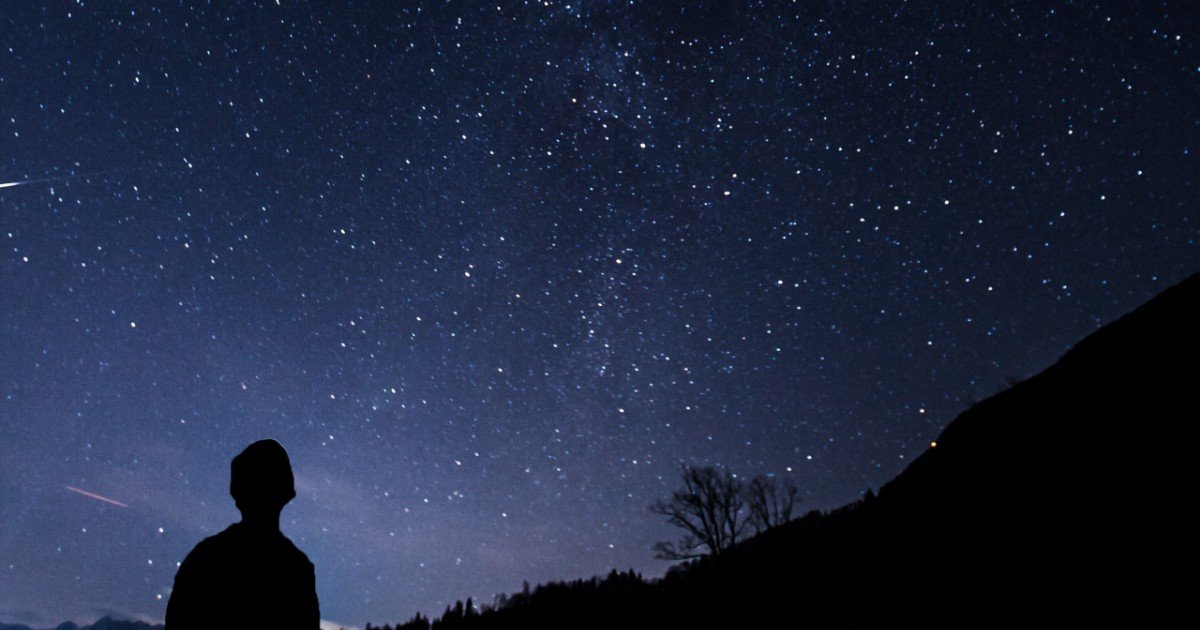
“Without the darkness, we’d never see the stars.”
In a year like this one, what are the “stars?” That list would be too long. Let me start with just the last month.
- The fact that it’s again cold enough for jackets that have pockets for poop bags and phones so that I no longer have to strap my “Pooch Pocket” around my hips when I walk the dogs.
- The fact that all three of my grown kids seem to have embraced a resurrected tradition of Sunday dinners together.
- The fact that, right now, I have a weekly opportunity to get schooled in football by my son, who has become a super fan.
- Also, the warm fuzzy that I get at the fact that all five of us shout my mother-in-law’s favorite (only?) cheer – “GOOD!” – while pumping one fist at every good play.
- The fact that it’s soup season.
- The fact that it is sleep like the dead under a mountain of blankets season (which might have something to do with the oversleeping that just I blamed on the lack of a sunrise).
- The fact that I could go on!
Is it possible that the “stars” are glimmering more brightly and more memorably right now because of the year we’ve had? Is it possible Meyer was not just talking about the night?
For millennia humans have celebrated light during this dark season
Early December is when the Christian liturgical season of Advent begins. During these weeks, we are invited to enter into a waiting frame of mind and state of heart. What we are waiting for scripturally is the birth of Christ. What we are waiting for in a broader sense is the coming of light into the darkness in this world that can feel overwhelming at times.
It cannot be an accident that the ancient church fathers chose December for this season. After all, in the Gospel of John, it is written that “The Light shines in the darkness and the darkness did not overcome it.” Is there a better time than this dark season, when the hours of daylight are outnumbered by the hours of darkness, for millions and millions of Christians to practice peering into the darkness with faith that the light is there? To peer into the darkness with hope that the light has not, nor will it be overcome by the darkness?
The stars are there whenever we remember to look
This feels good and right and true to me right now. This feels as good as it feels to cozy up around the dinner table with the ones I love and their friends. This feels as right as it does to squeeze together on the couch in front of a game. This feels as true as the hope I felt flare within me when I took three minutes to think about the “stars” that have twinkled in the sky of my life in the last few weeks.
Which is all to say, remember that it is on the darkest nights that you can best see the stars. Actually –the United States National Parks now include Dark Sky Parks for exactly this reason. And metaphorically – see above. So when things get dark or just feel dark, let’s promise one another to look up and count some stars.
There is an Anais Nin quote that captures two of Patanjali’s five causes of human suffering – avidya and asmita. “We do not see things as they are; we see them as we are.” When translating the Sanskrit to English, avidya means to pierce ignorance and confusion (YS 2.3-4). Asmita means “I am-ness,” which manifests in seeing things from only your own perspective (YS 2.3 and 2.5). When life feels dark, we can pierce through that darkness (which can often be a result of our own perspective) by practicing the opposite (YS 2.33) – by looking for the light.