
Learning at the knees of a (Scrabble) master
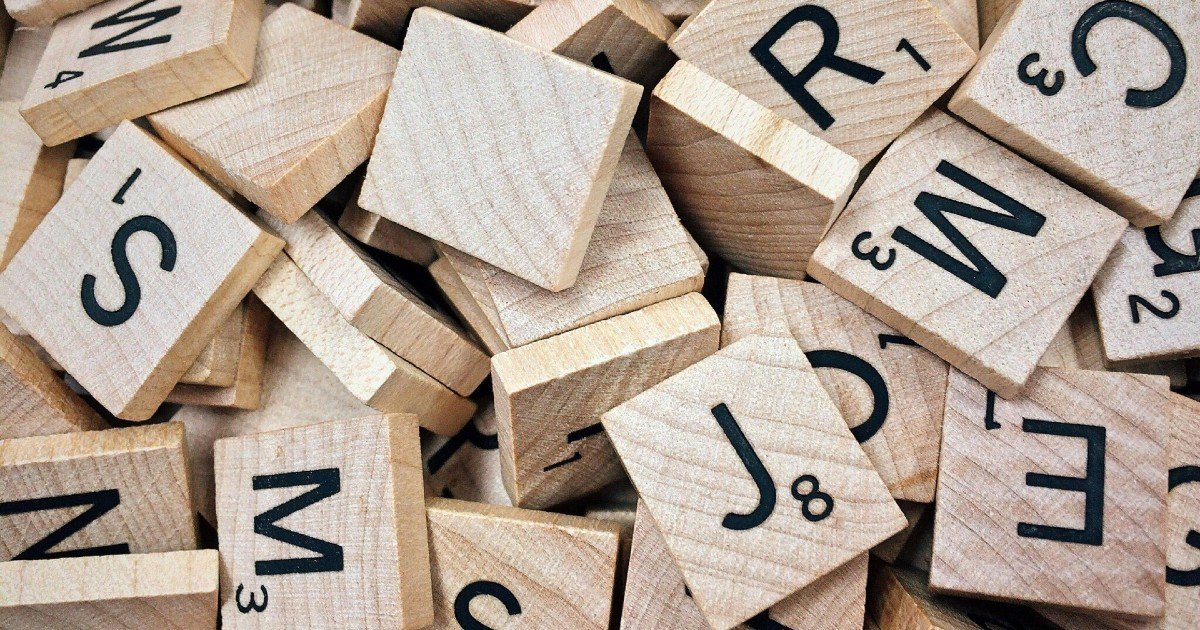
I was a little girl when I fell in love with word games. My grandmother, Nanny, taught me how to play Scrabble. Because she was ruthless in her play, she also taught me to play to win – at all times. I think we’d been sitting across the board from one another for at least a decade before I finally beat her at our favorite game.
Looking back, I see that, as sweet as that long-awaited win was, the sweetness of that victory pales in comparison to all the time my grandmother and I spent together noodling around with letters and diphthongs and figuring out how to play on the “premium squares” to get those extra points. Every game we played, I learned. Every time we sat down, I got a little better. The practice was more meaningful, it turns out, than the results.
I’m sure some of you might think that by regularly beating a little girl, my grandmother was too rough on me, but I see it differently. It was rare and wonderful for little-girl-me to be taken seriously enough as a player that my very grown-up opponent brought their A-Game. Just getting to play with her was a “win” in my book. In the end, the greatest lesson I learned in my hours across a Scrabble board from Nanny was that playing – and playing well – is fun whether you win or lose.
Another master teaches to bring your A-game without worrying about a win
Flash forward a few more decades and I can see that Nanny, who had never stepped foot onto a yoga mat, managed to give me a real-life example of one of the most powerfully transforming and most counterintuitive teachings in The Yoga Sutras of Patanjali. In the first half of his work designed to teach students to quiet their minds and live peacefully no matter what life is dishing out, Patanjali offers a pair of seemingly opposing qualities that we must master in order for our practice to bear fruit in our lives off our mats – the ability to maintain a steady, dedicated practice and the ability to practice steadily with no hang-up about whether all that practice is working.
Chasing a “win” is where we begin
This can be a tough one to grapple with even before you try to carry your yoga off your mat and into your life. After all, if you arrange yourself into the shape of Downward Facing Dog enough times, it is natural to expect that a) the posture will get easier and b) your heels will eventually reach the floor. At least that was my expectation. It doesn’t always happen.
The good news is that every yoga student ever has encountered a posture that was once out of reach and that they finally “got.” In the beginning, this progress is what keeps us coming back to our mat. Progress, it turns out is “baby food.” It gets us established in our practice (abhyasa).
Sticking to it when we don’t “win” is the whole point
Over time, every yoga student ever also starts to realize that there is a posture that, no matter how hard they practice, remains just out of reach. Let’s go back to Downward Facing Dog. As you steadily practice, you might discover that there are many, many times when your heels are actually further from the mat rather than closer to it than they were the last time you practiced.
There are a thousand possible reasons why you have not “progressed,” or worse, regressed. Maybe you went on a long hike over the weekend. Maybe you stood on the sidelines of your kid’s tournament for a whole afternoon. Maybe you simply used your legs for something other than yoga. It doesn’t take a lot of practice before you collide with one of yoga’s hugest lessons – progress is not the point; practice is.
In fact, decades into this practice, I can say with certainty that practicing when you are confronted with a distinct lack of progress – when you can’t see yourself getting stronger or more flexible – is what creates the inner strength and flexibility that change the way you are navigating your life. If progress is “baby food,” this is “solid food.” This is being free from our natural human attachment to results (vairagya).
Without this freedom, we would be hard-pressed to keep turning up on our mats during those long stretches when we can’t see or feel ourselves getting “better.” And we need to keep showing up. Patanjali says we need both practice and non-attachment. Practice is the effort; non-attachment is the ease. Either without the other “tastes” too sour or too sweet. Together, however, they are the perfect sustenance for a well-lived and fulfilling life.
When we’re not worried about the “win,” we’re free to enjoy the game
It makes me smile that Nanny wound up teaching me so much more than how to play Scrabble. She taught me how to do anything – with steady focus, effort and creativity. She taught me to play my best all the time – no holding back. But that’s not all. By playing her best and beating me so often for so many years, she also taught me how to see beyond the obvious “result” of winning or losing. She taught me that the real joy was in simply playing the game.
It’s not too far of a stretch to see that, like a yoga practice, the lessons Nanny taught me from across a Scrabble board are even more sustaining when applied to real life. I don’t know what the traditional greeting at the end of a Scrabble game is, so I’ll say, “Namaste, Nanny. I bow to the light of your teachings and thank you for bowing to mine by playing with me.”
The way to settle the activity of your mind (vritti) and reach a moment or two of stillness (nirodha) is through practice (abyhasa) and non-attachment (vairagya). – YS 1.12
Practice is the steadiness of effort and the effort to be steady. – YS 1.13
It will take a very, very long time and steadfastness, honesty, sincerity, and hard work before we are solidly grounded in whatever we are practicing. – YS 1.14
True non-attachment is the letting go of the desire for anything – any goals, results or outcomes. – YS 1.15
When we practice both steady effort and non-attachment, we find a balance between doing and allowing. We are free to be true to ourselves in each moment without getting tangled up in desire or aversion or being disturbed by wishing life were different than it is. We are finally able to accept each moment exactly as it is. – YS 1.16