
When we practice enough, what we practice becomes who we are
The white-haired old man looked unassuming and even a little stooped as he walked across the stage. He settled comfortably onto the piano bench with a smile and turned to nod at the conductor. He then turned and did the same to the orchestra arranged around his massive, gleaming black piano.
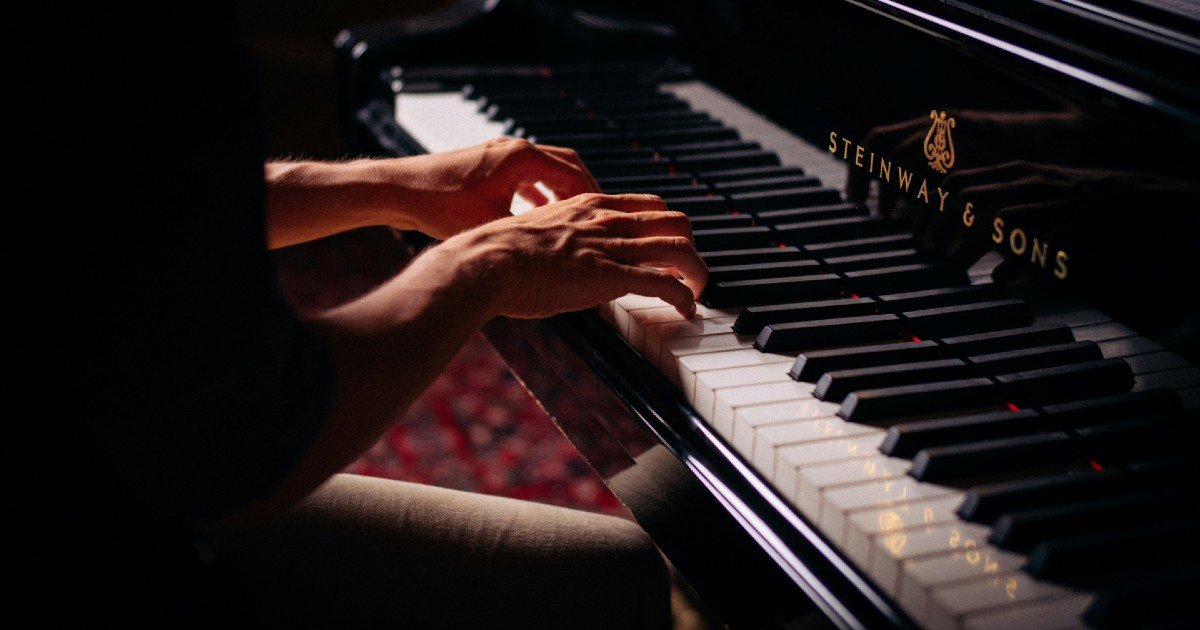
When he began to play, I felt tears spring to my eyes and the hairs on my arms stood up. His hands flew up and down the keyboard – the notes so soft it seemed impossible that he could control his touch so deftly at such speed. While his left hand danced, his right hand hovered over keys maintaining the sweetest, steadiest trills for measure after measure.
I could not perceive a bit of tension in his body. His hands were at ease even in their flurry of motion. His arms were loose – moving as much in response to the melody as they were to where his hands needed to be. His shoulders swayed easily, never once creeping up toward his ears. His face was soft – smiling gently. No furrowed forehead or gritted jaw to indicate how hard he was working to make this exquisite music.
I know from personal experience that what he was doing was excruciatingly hard. Making music at that level is difficult physically. It is even more difficult mentally as you hold your focus on exactly what you are doing – on exactly the touch of this fingertip to that key in this instant. Yet there he sat, more a participant of the music than a creator of it. The music swirled around him. It surged and danced through him. And he was enjoying every moment.
I was clearly witnessing the brilliance of a talent burnished to an astonishing level. I was enjoying the fruit of decades of hard, finger-numbing work. Of unimaginable hours of practice – drills and scales. Of a lifetime dedicated to constant study, craftmanship, and technique. But, that night, I wasn’t seeing hard work. I was seeing the beauty, lightness, joy, and pure magic that result when effort bears its fruit.
When we practice enough, our practice can change the way we live
This is not the first time I’ve seen the ease of mastery like this. For years, I made a point to study with as many teachers as I could who had traveled to India in the 1970s to study yoga. These original western yogis spent years and years in small shalas in India sweating and practicing with teachers I could only study with through books. By the time I showed up in their classrooms, they had been practicing for almost as long as I’d been alive.
I worked hard as I studied with them – devouring technique, discipline, and challenging practices. But mostly I loved the quality of their presence. I loved the lightness with which they moved. I loved their keen senses of humor and easy way of laughing kindly as they answered the most earnest questions. There was a humility about them that belied their wisdom. There was an ease to these men and women that had an irresistible glow to my naturally hard-working soul.
These yogis had reached the far side of practice. “Doing” the practice was no longer the point. They had practiced yoga so thoroughly and for so long that there was no separation between who they were and the practice itself. Yoga filled them as completely as music filled Emanuel (Manny) Ax on the stage with The Philadelphia Orchestra after 50 years of professional play. Just as Beethoven’s brilliance flowed brilliantly through Manny’s body, yoga flowed through these long-time teachers in the way they walked and talked and saw the world around them.
The point, it turns out, of a yoga practice is not to get better at practicing yoga any more than practicing scales and drills is meant to help a pianist to get better at playing scales and drills. Pianists practice to get better at making music; to become so at ease at a keyboard that they learn to get out of the way and to let the music pour through them. It’s the same for yogis. We practice to become so comfortable with the practice that, with very little effort, we find that it has made us better at living and loving.
What could this look like? What could it be like to live in the easy way that Manny Ax sat at the keyboard? What could it be like to navigate life lightly and with a sense of humor the way my yoga teachers did? While I don’t know for sure, the way my heart lifts in response to these questions makes me optimistic that one day, perhaps by the time I am a slightly stooped, white-haired old woman, my hard-earned practice will have led me into an easy dance with my life.
Patanjali uses seeming opposites to show us how yoga can help us live. He teaches us that we are meant to work steadily and ardently at our practice (abhyasa), while, simultaneously, detaching from specific outcomes of our work (vairagya). Asana, the physical postures, require our effort (shtira) but this effort is to be balanced by a sense of ease (sukha). Pranayama, mindful breathing, is a rigorous discipline that is meant to be soft and unhurried. We start with the effort, which, in turn, leads us to spaciousness and ease.