
Thanksgiving blessings
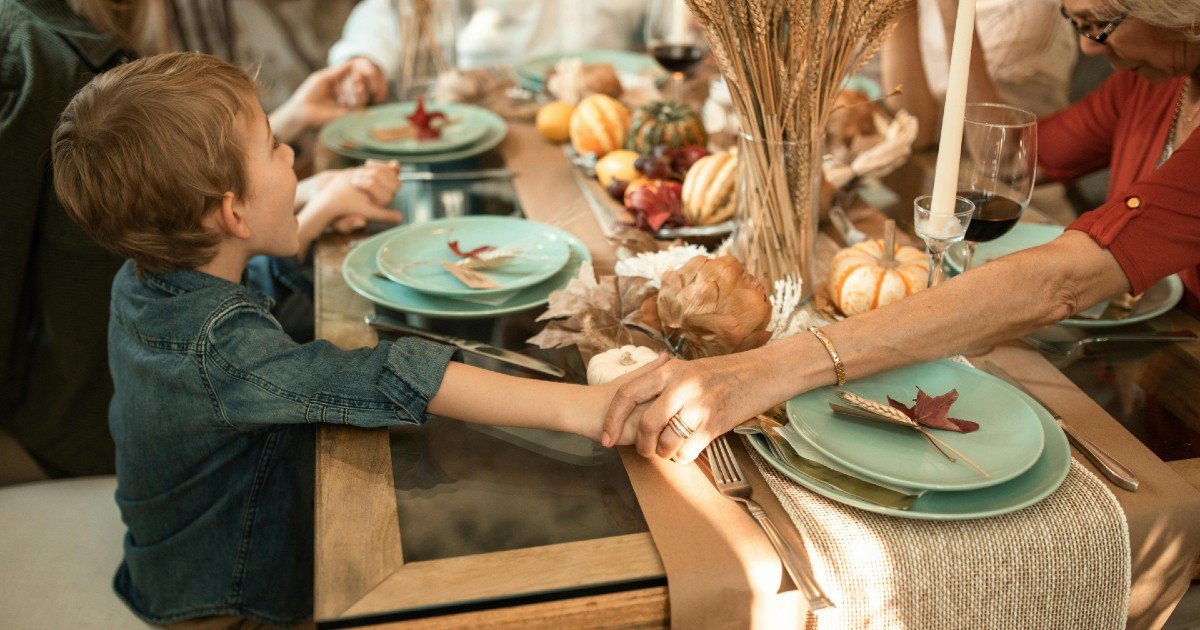
There are years that counting blessings around the Thanksgiving Day table is an easy and ebullient experience. People and events for which I am grateful spring to mind and roll off my tongue in a joyful list. When I think of the smiling and expectant faces in the print of Norman Rockwell’s famous painting, Freedom from Want, that hung in my mother’s kitchen every November, I typically imagine the family around that table are having this kind of year.
Yet, there is the title of the painting to consider – Freedom from Want. This makes me pause. Perhaps this family has had one of those “other” years. Years when the most memorable event was a loss that has left an empty seat at the table or when the most consuming happening is an illness that is still running its course or an unexpected job search that has not yet resulted in employment. Seen from that perspective, those smiling faces are less expectant and more joyful just for the blessing of being together to share a meal.
Gratitude can transform us
And this is the beautiful thing about Thanksgiving (the holiday) and thanksgiving (the act) – they “work” no matter what kind of day, week, month, or year that you’re having. What do I mean by work? I mean that seeking and expressing gratitude can transform us. When sincerely experienced, they can change our perspective, and they change the state of our heart.
Annually, in November, as a way of making my favorite holiday last for 30 days rather than just the one, I typically make a habit of a daily gratitude practice. It’s a quiet little practice – sometimes not even written down in my journal. It’s just a pause the first moment I notice that the date starts with the number 11 to think of something for which I am thankful.
Gratitude can surprise us
Well, this year is one of those “other” years for our family. One of my kids has been sick and the illness is not yet resolved. Suffice it to say, I realized two weeks (to the day!) into the month, that I had not been noticing my blessings each day. My initial reaction was, “Duh. This is not the year for that.” But then, on that very same day, having just said goodbye to my child after yet another doctor’s appointment, I found myself smiling about the conversation we’d had as we waited in the exam room. And I realized that I was grateful for something that my child and I would not have shared were it not for this struggle.
For me, this is a non-Pollyanna-ish way to practice gratitude during hard times. I am NOT grateful for this illness. I do NOT believe that my child needed this experience to become the person they are meant to be. I do NOT think for one moment that our lives would have been shallower or less meaningful if we’d been able to skip this ordeal. However, within the ordeal, there are moments that glimmer, that feel like true gifts, that make my heart swell with thanksgiving.
When I notice these moments, when I really, seriously tune into them as they’re happening, the tenor of the day shifts for me. Typically I come home from what I’ve come to call “medical days” completely depleted. But not that day. That day I was smiling. That day I was thankful.
When counting your blessings feels out of reach, just keep an eye out for moments that glimmer
After enough practice, I suspect that noticing (not expecting, just keeping an eye out) could become a happy-making habit similar to my old daily gratitude practice. And one that, because it is not linked to Thanksgiving Day, could last much longer than just a month. In the meantime, I am thankful that I can once again imagine myself around a table like the one that Norman Rockwell painted – with a smile on my face and a blessing in my heart.
I hope you and yours enjoyed a lovely Thanksgiving Day and am very grateful for your willingness to share these musings of mine.
Patanjali writes that we will finally find peace (“be undisturbed”) when we can truly detach from our longing for anything – any outcome, any preferred reality, and promise of everything finally being okay. To me, this is not getting okay with what is clearly not okay. It’s the ability to find okay-ness within decidedly not-okay moments. (See sutras 1.15 and 1.16)