
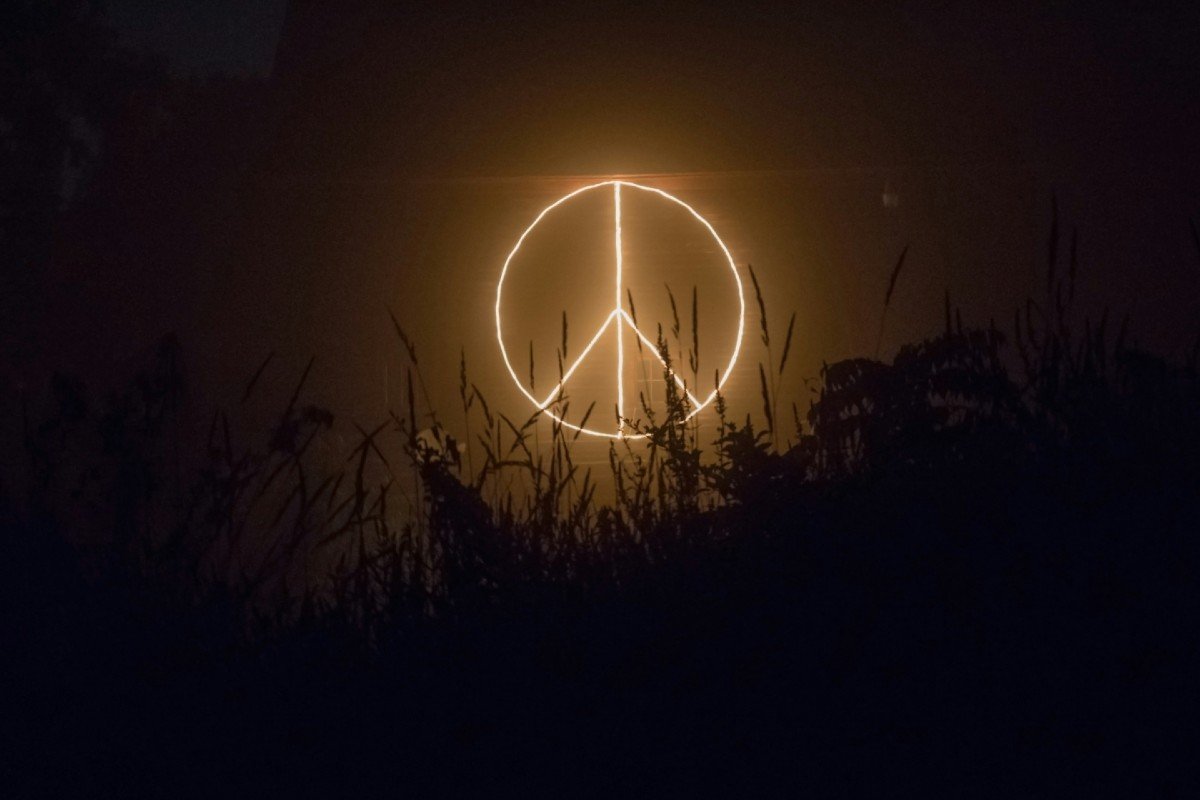
Peace? I don’t think so!
“Peace be with you.” This lovely moment in every Sunday morning church service can feel fraught on days when I feel decidedly unpeaceful. Even though I am being offered the very peace that I so desperately need, when things are majorly amok, a little part of me snarls, “Not right now. This is not the time for that. Isn’t it obvious that I am busy worrying myself to the bone?”
But what if the peace being offered has nothing to do with everything suddenly becoming ok? What if the peace being offered is the very calm and open state that a person would need to best navigate anything that feels majorly amok? M. Scott Peck says, “Mental health [which, in my mind, could be a synonym for inner peace] is dedication to reality at all costs.” What if the peace being offered is an invitation to truly sink into whatever is going on?
Fear is often worse than that which we fear
It occurs to me that every single time I have ever been afraid, my fear has been exponentially worse than the thing I feared. Maybe this is true for you, too? Think about those hours or days between having a lab test done and learning its results. Or preparing for a difficult conversation with your boss or your teacher. Even in extreme moments when I knew death was near for someone I loved, my dread caused me more inner strife than my grief ever did.
In other words, my own reactions to painful or uncomfortable things cause me more pain and suffering than the painful things themselves. Is it possible that the peace being offered when someone says, “peace be with you,” is an invitation to take a breath and notice how much I’m struggling? Within that invitation is the chance to notice that I have a choice: I can continue to fight tooth and nail against whatever is happening, or I can surrender to it.
Peace comes when we stop fighting
Were I to surrender, I would not be surrendering alone. I’m surrendering into something greater than me. To something that is infinitely more creative and inclusive than my own small view on how this mess (or any mess) should go. Kate Bowler suggests that “peace is the tug in our bones, reminding us that we weren’t built to do this – any of this *gestures wildly* – alone.” Like this, surrender feels far less terrifying. It even feels possible.
When I manage to surrender (to acquiesce to reality) a quiet clarity washes over me. I can see what is mine to do – and what is not. I know for sure what my priorities are. I am blessedly free to begin to live my way through it – whatever it is. The peace I feel as I do so has nothing to do with what is going on around me and everything to do with what is no longer going on within me – resistance, rejection, and refusal.
Finding your way to peace can be a decidedly unpeaceful process
This parallels a lesson I often teach about meditation. Many of my students have the misconception that meditation is a peaceful practice; that people plop down on a chair or a cushion and bliss out. This is hilariously untrue. Meditation teacher, Corey Muscara, writes, “Meditation is not about feeling good. Meditation is about feeling what you’re feeling with good awareness. It just so happens that if you do so enough, you end up feeling good.”
What I most need when I am upset because my life is majorly amok, is to become keenly aware of the source of my un-peacefulness. Nine times out of ten, as Taylor Swift says so confidently in her song Anti-Hero, “It’s me. I’m the problem. It’s me.” Realizing this does not feel peaceful or good.
Yet it is in the uncomfortable moment right after I see (really, truly see) the truth that it is me, rather than my life, that is causing my suffering that an unexpected and quiet peace washes over me. When I put down my fists, I am able to work with whatever is happening. When I wave the white flag of surrender to what is happening, my eyes, mind and heart all open to ways that I can navigate my amok-ness with a little more serenity, a lot more ease and, if I’m lucky, maybe some inner peace.
Peace be with you. And also with you.
“Peace be with you.” I mean it. And, if you, like the Episcopalians in my church find yourself responding, “And also with you,” I will gratefully receive the same in return. May we all receive the peace that follows when we manage, even momentarily, to embrace the totality of our messy and lovely human lives.
Patanjali encourages us to practice santosa or contentment (YS 2.42). Contentment is not to be confused with complacence. We will always be asked to be active participants in our lives. But while we are actively working in the direction of our hopes and prayers, we must also be content with what is – what is right now along the way to what will be. When we practice santosa, we find peace at every step – the easy ones and the hard ones – along the way.