
Gardening for grief?
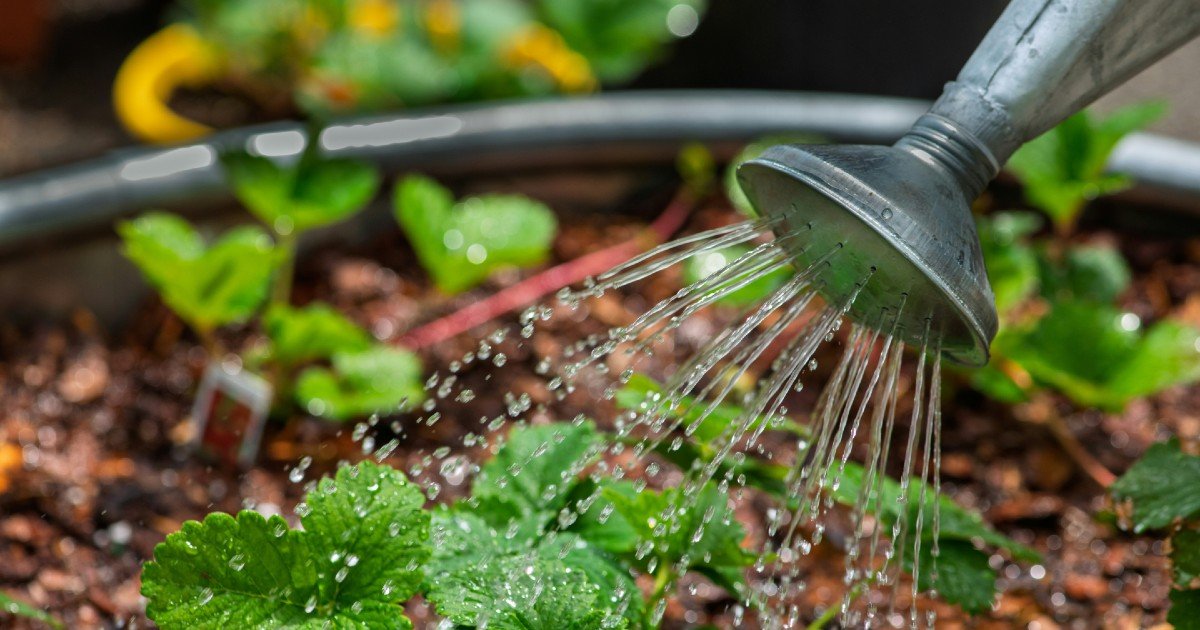
In the weeks after my brother died, about all I could accomplish was watering the shade garden that I’d dreamed up and planted along my driveway during the height of the pandemic. During that summer I lovingly watered each of the hundreds of little plants by hand. I was incredibly precise, methodically (and meditatively) counting seconds as they ticked by. 30 seconds for each fern, because they don’t like to have wet toes. 60 to 90 seconds for each hosta, because, oddly, they do enjoy “wet socks.”
While I watered, I was at peace. I was not playing the very painful “Shoulda Woulda Coulda Game” that often tortures those who lose loved ones to suicide. I was also not trying to do anything that was beyond my diminished self, as so much of the work that used to excite me was. My plants (being plants) were happy to receive my company and my ministrations no matter my state of mind. I could be quiet or I could cry or I could seethe with rage, and all was well. They were the perfect companions.
As I cared for my little green “babies,” I was somehow also tending my own broken heart. As I watched the plants in my garden stretch and grow day by day, suddenly sending up stalks and blooming extravagantly, a part of me began to believe, in the wake of this horrible loss, that I would do the same eventually. Being wholly present in the present moment gave me a sense of hope and optimism about what was to come.
Choosing to shrink the aperture of your awareness
Why am I thinking about this now, almost eight years later? Because I am again finding myself drawn to simple activities that demand my complete presence. When these “jobs” are outside, they are even more effective in creating the inner state that I am craving and that I most vividly remember from that long ago summer spent tending my garden.
The summer after my brother died, something deep within me learned the power of adjusting the aperture of my awareness. Instead of focusing on the shock waves shaking my extended family, or an unimaginable future without him, I kept my metaphorical lens as small as I could. I focused on exactly one moment – one second! – at a time as I cared for my plants. Doing so helped me to recognize that moment to moment, I was OK. It was when I lifted my gaze to look back into what was or ahead to what would be that I got overwhelmed and fell apart. Right here, right now in my driveway, I was well.
The national and global chaos of the last months has left me feeling unsettled, frightened, and more than a little helpless. The powerful emotions that course through me almost daily after reading or watching the news can easily overshadow the “current events” of my own life. “Newsworthy” happenings like laughing as I watch my dog nose his treat-dropping ball around the house. Or celebrating a good grade with my daughter. Or seeing an aspect of yoga philosophy a whole new way in the wake of a student’s comment in class. These little things that I could easily miss or forget in my overwhelm are remarkably setting.
Finding this state of mind
Do you remember the magazine National Geographic World? How on the last page there was a game where you could guess the subjects of a series of tightly zoomed in photos? Peacock feathers. Fish scales. The bark of a tree. The cap of an acorn. If you do, do you remember how your excitement over the fact that you figured out what the picture was of paled in comparison to your astonishment over how incredibly beautiful regular things were when you looked at them really, really closely?
We can find this same satisfaction and astonishment by shrinking our aperture down really, really, really small in our daily lives. By taking another, closer – much closer – look at all the regular things all around us on a day when life feels upsetting or overwhelming or confusing. To do so, we have to get a little still. We have to pay very close attention. We cannot be daydreaming or worrying or imagining outcomes. We must be right here right now to see the beauty of the everyday.
Tasks that demand my presence right here and right now serve as a reset for my being. These tasks – sanding porch furniture, power washing the patio slates, methodically picking the hedge trimmings out of the garden where they fell as my husband pruned – are a reminder of how peaceful it is in the present moment. Each moment spent peacefully in the “now,” reinforces my craving for that type of presence even as the world around me inexorably pulls me back to what happened yesterday or draws me ahead to what might happen next.
In each moment life tilts toward the good
When we adjust our aperture like this, we remember as Anne Lammott did, that “life tilts to the good. That everything true and beautiful can be discovered on any ten-minute walk.” Staying present gives us the mental and emotional space to fully soak in this one, extraordinary moment.
Give it a try. However you choose to dial in your focus, I pray that it fills you with the hope and optimism that I found watering my garden.
Patanjali opens his sutras with the line Atha yoga anusasanam. This Sanskrit phrase is most often translated into English as, “Now begins the teaching of yoga.” (Emphasis mine.) But there is another way to read this – “In the Now, yoga happens.” (Alan Finger, Tantra of the Yoga Sutras.) Whichever way you read it, it is clear. The clarity and peace offered by yoga is only available in this one moment. Every other moment – past or future – is a distraction from the beauty and simplicity that is available to those who are able to keep their apertures small enough that they are fully absorbed in what is – right here and right now.