
Loss leaves a hole in life
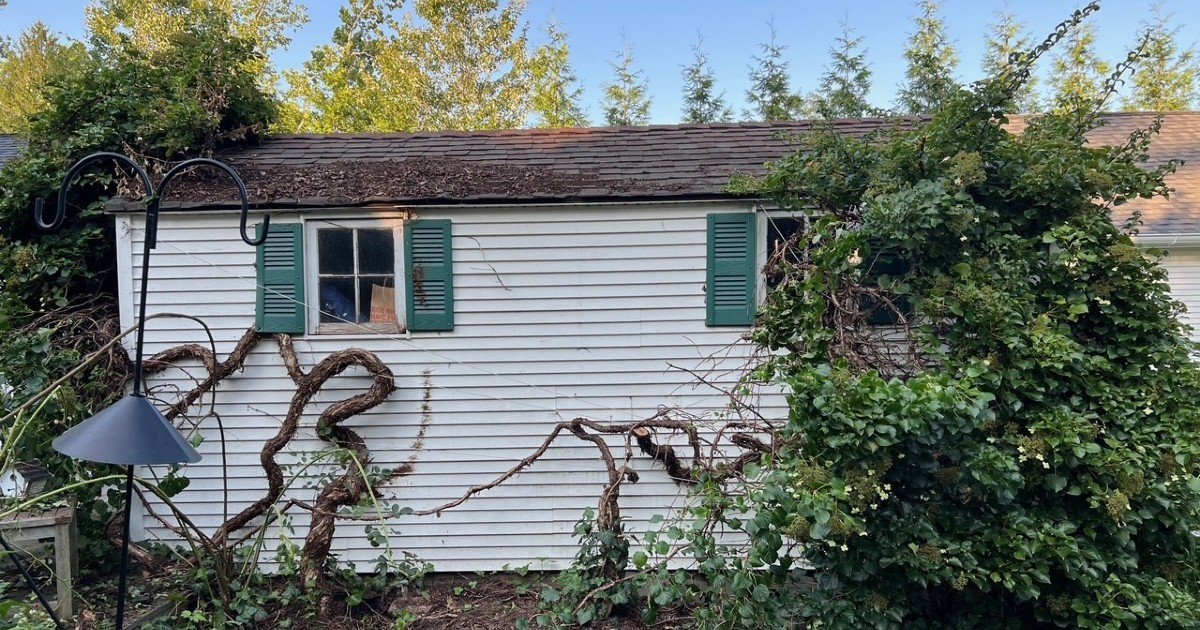
Twenty-five years ago, my mom and I planted three climbing hydrangeas along the base of the garden shed in my brand-new back yard. As they slowly grew, it seemed to me that they were transforming the shed into a secret cottage like the ones that filled my favorite childhood stories. In no small part, it is their wildness (climbing hydrangeas are willful plants) that gives my backyard a cheerful lushness that some might mistake for being overgrown.
On the first anniversary of my mother’s death, my husband and I discovered that the center of these three hydrangeas had pulled away from the shed, collapsing into the yard. My magical, secret cottage is now awkwardly (and glaringly) bare on one of three sides. Sadly, that side is the one that faces the patio and the backyard. There is no missing the gaping hole the hydrangea has left in its absence.
Which is why, coming as it did on this exact day, that its loss has been extra poignant. It feels like a visceral reminder of the gaping hole that is left in every family when one of its own dies. It is like a living metaphor of every family photo we’ve taken in the last year – an empty space where my mom would have been beaming at the camera (something she never forgot how to do even as her dementia progressed).
Life goes on around that hole
In addition to this foundational loss in the landscape in my backyard, so much has happened in this first year without her. New homes. New love. New illness. New jobs. New ways of gathering. All kinds of news. I imagine she would look at our family and feel as startled by the change as I do when I look at the bare wall of my shed. Even when you lose someone as foundational and essential as your mom, life goes on.
It’s not pretty after a loss. I read somewhere that death hits a family like an asteroid. It sends everyone reeling into new orbits for a little while their hearts heal. These new orbits, if you will, can be as painful as the death – adding what feels like extra loss as surviving family members miss one another and grieve the way things were.
Life is resilient
My view of my yard is a perfect example of the emptiness of this stage of grief. Even if you’d never seen my hydrangeas in all their glory, there is no way you would not understand that something important has been torn away in the spot where they were. When I texted my trusted landscaper friend, Andy, about the catastrophe in my yard, his reply was optimistic. “Climbing hydrangeas are remarkably resilient. Cut it back to its main frame, fertilize it well next spring, and it will begin its new journey across the shed.”
His note touched my heart in a way he could never know. Because isn’t that exactly what a family does after loss? We pull back. We slow down. We take care of ourselves and, when possible, one another. But the “gravity” of love and history are eventually strong enough to pull us back toward one another from our individual “orbits” of grief. Life and love call us onward to begin our journey of exploring life “after.”
Life is change and change is life
As I look out my office window, my eye catches painfully on the jarring blank space in my yard. I know I cannot NOT feel the loss. I don’t want to. I loved that plant. I also know that, even as I mourn, I can choose the hopefulness that Andy shared with me in his note. Life is change, after all. And change is life. Like my family is doing, my yard will be finding its way back to wholeness for a little while. It may look a little awkward while it does so, but I can trust that it will get there. And so will we.
Avidya (YS 2.5) is our tendency to confuse the temporary with the eternal. When we recognize that everything that is alive is temporary (things as unimportant as a climbing hydrangea and things as elemental to one’s life as their mother), we come to discover that the pain of loss is also temporary. If we don’t hold on to the pain too tightly, if we allow ourselves to embrace the continued changes of life, we also allow ourselves the freedom to enjoy the new beginnings that await us.