
WAY more than a yoga lesson
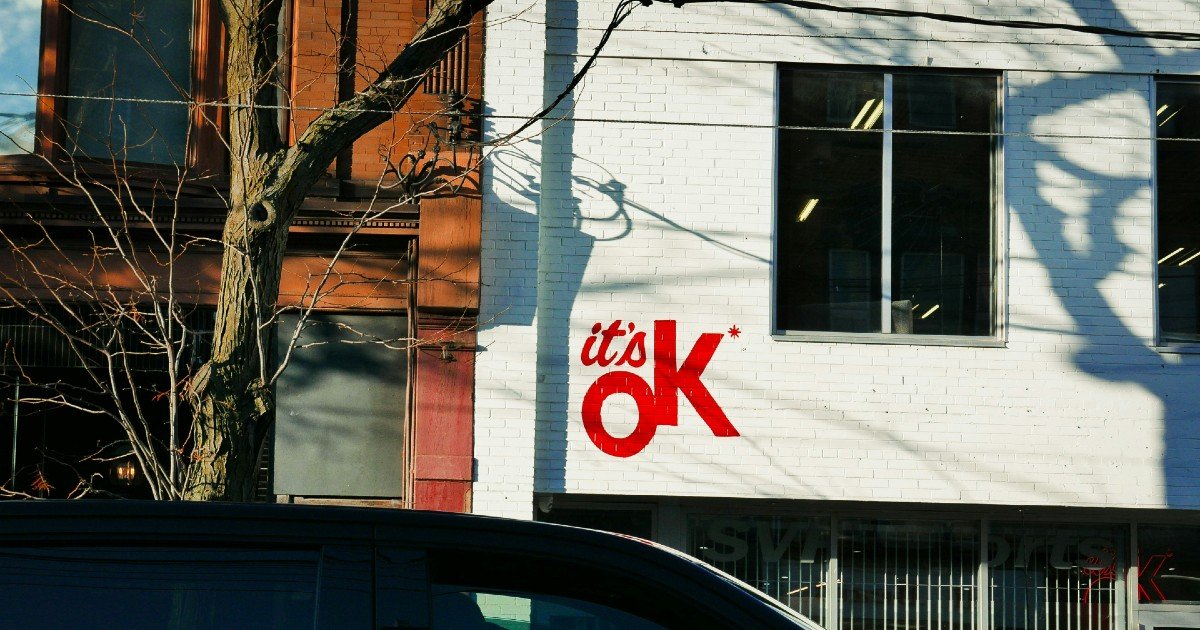
One of the most impactful lessons I’ve learned from my yoga practice is a one-liner from a long-ago three-day workshop with David Swenson, a gifted practitioner, teacher and “liver” of yoga. As he taught a particularly challenging posture, someone in the crowded room messed up. He bounced over to them and just before he gently helped them to try again, he quipped, “It’s OK. You’re still a good person.”
And in that seven-word sentence, he encapsulated the essence of both this practice and most faith traditions. “It’s OK. You’re still a good person.” You’re still worthy of kindness. You’re still valuable. You’re still lovable. In fact, you’re still beloved.
The “situation” of being human is messy
There is meaning in that one-liner that could be entirely, fully liberating should we ever be able to embrace it. We are human. We are “made of clay.” We are going to mess up. It is not ours to be perfect. It never will be. That is the domain of another lifetime or another Being entirely.
Ours is the domain of mistakes – big mistakes and small; mistakes that no one but us knows about and ones that are quite public; mistakes that only hurt us and ones that splash all over other undeserving folks. This is the human situation.
For me, this is difficult wisdom. An essential part of me, despite a virtual lifetime of practice, still resists it rather desperately at times. Like most meaningful life lessons, this one seems to come in a spiral curriculum sort of way. Let me explain.
A spiral curriculum
I remember being invited to grapple with my passionate desire to not mess up (or in this case to not “get caught” being messy) a very long time ago in the early days of motherhood. While this lesson was at a surface level, it was not easy. I desperately wanted my home to be neat and company-ready at all times even though I lived with three small children, a puppy and a cat. Every mess made me cranky. Cleaning up was wearing me out. I fought long and I fought hard before finally surrendering and embracing (mostly) the chronic messiness of a happy family home. What a relief this was for me and the little ones who shared my house.
I also remember an invitation to grapple with it on a deeper level. Again the issue was my feelings about getting caught making mistakes or not measuring up. This time I was wrestling with constructive feedback on my work. I showed up for each observation and each supervision session with the subconscious goal of receiving a pat on the back and a gold star. Instead of receiving suggestions as gifts that could help me become better at my work, I fell apart inside when I was offered an opportunity to improve – sometimes into a quaking, panicking mess. Until – again with relief – something shifted and the wisdom that perfection is unattainable settled deeper within me.
Just last week, I found myself once again back in my fight against my own imperfection. My dog died suddenly from a bowel obstruction. He (like me) was not perfect. Like at all. He had a stubborn and unhealthy habit of stealthily stealing and eating socks and underwear. This time, we didn’t get lucky. The viciousness of my self-flagellation at everything I didn’t do and all I could have done differently drowned out even the pain of my grief. “Shoulda!” “Woulda!!” “Coulda!!!”
This was a falling apart like none before. But something in me recognized these feelings. Something in me sensed that I had fallen into a trap I’d been falling into for my whole life. Something in me not only yearned to hear, “It’s OK. You’re still a good person,” but knew that the relief of that wisdom would be available to me if I could just put down my fists.
In a spiral curriculum the lessons always get harder and more valuable
A heartfelt call from our vet, who also seemed to be beating himself up for misunderstanding the fragility of our dog’s situation, played the role of David Swenson in this massive mistake of mine. Talking to him helped me ease up. Helped me to be able to say to myself, “You didn’t mean it. You loved him. You’re still a good person.”
But a bigger, deeper lesson appeared (as happens with spiral curriculums). It was the shimmering and yet sledge-hammer-ish realization that this will never cease. I will continue to make mistakes for the rest of my life. And that this is for good reason: I am created perfectly imperfect so that I will always need the grace and forgiveness that allow me to keep learning and growing and becoming.
This dependence on grace, on forgiveness, on the steady acceptance of a Higher Power echoes my yoga teacher’s message, “It’s OK. You’re still a good person.” This is the ultimate freedom. It is the ultimate gift. It leaves all of us able to face each of our mistakes by taking a deep breath and quietly saying (maybe even with the gentle smile of the kindest teacher you can imagine), “This again? OK. Let’s try this again.”
It’s by messing up that we learn almost everything that matters
Another of my teachers, Richard Rohr (himself filled with profound one-liners), brings it home by writing, “It’s in falling down that we learn almost everything that matters spiritually.” I can add that the same is true on a yoga mat. It’s in the messing up that you learn almost everything. And (I think, hopefully, possibly, finally) that I can confirm that the same is true off the mat and in real life.
To recap: messing up is not something any of us love to do. Messing up is especially messy when our mistakes splash on others. But, when we put down our fists, messing up is always an invitation to learn and grow and do better next time. Let’s repeat it together and let’s mean it:
“It’s OK. You’re still a good person.”
Our mistakes are not obstacles on our journey of becoming the people we are created to be. They are the journey. Patanjali begins the eight limbs of his practice with kindness (ahimsa). This is the voice that says, “It’s OK.” He layers truthfulness (satya) on top of kindness. For “It’s OK,” to really matter, we have to see the truth of what we’ve done or left undone. That can be painful and yucky, but it’s necessary for us to truly believe that not only is “It OK,” but that we are really and truly “Still a good person.”