
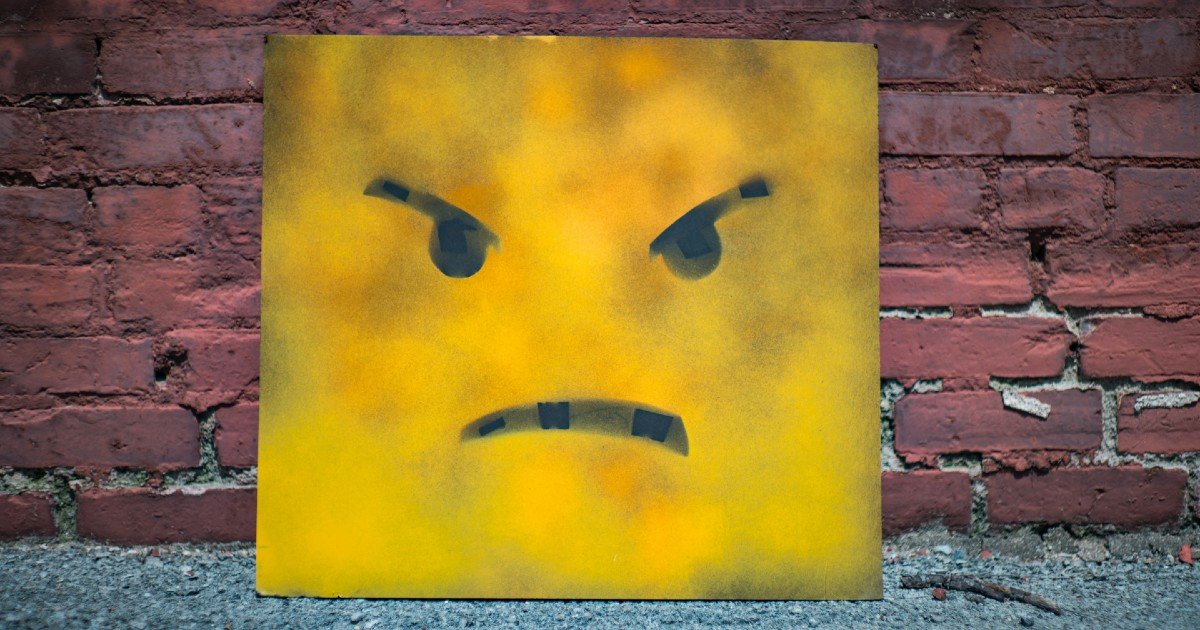
Seriously. I am P.O.’d
Back when he was in high school, my son had a friend whose favorite “curse word” was, “I am so P.O.’d!” I am quoting her when I say to you, “I am so P.O.’d!” Not only am I P.O.’d, but I am P.O.’d that I am P.O.’d, which is only adding to the cyclone of feelings storming through me.
A long while ago, someone hurt me really badly. That wound festered for long enough that my hurt feelings slid (as hurt feelings easily do) into outrage. To make things worse, my feelings are totally justified. And I’m not just saying that. Just ask every single person with whom I’ve shared the story. That person was very wrong and I am very right.
But here’s the thing. Me being righteously P.O.’d is not doing one single thing to impact that person. It is not creating change or growth. It is not creating opportunities for healing. It isn’t even (as far as I can see) bothering them. In fact, the only person being bothered is me.
The fact that I know this and am still walking around super P.O.’d makes me even more P.O.’d – but not with them. Now I’m P.O.’d with myself! There is nothing I’d like more than to be free of this storm cloud of feelings that is plaguing me, but that is proving to be easier said than done.
Feelings and emotions are not the same thing
Eddie Stern, a yoga teacher based in NYC, writes that emotions are physiological. They are the way our bodies respond to situations or events. The way our heart speeds up when we get excited or scared, or the way our face flushes when we feel angry or ashamed. They are reactions we have to the world and people around us.
Feelings, according to Stern, are “how we think about what is happening in our body.” Feelings are the stories we tell ourselves about the raw data that our emotions provide. Because of our patterns, memories, and past experiences, they are very rarely a clear reflection of the emotion itself. “I am so P.O.’d” is an emotion. All of my self-righteousness around it is the story I’m telling myself that is clouding my emotion.
In fact, at this point, I’m pretty sure that the original emotion is long gone. Now my own feelings of self-righteous indignation are causing me to ruminate on what happened. This perseveration is creating emotions (bodily, physiological responses) of its very own. In short, I am prolonging my own suffering.
We should avoid any suffering that can be avoided – especially the suffering we cause ourselves
In the Yoga Sutras of Patanjali, we are taught that we should avoid future suffering that can be avoided. (YS 2.16) While there is no way I could have avoided the original hurt or wound (sometimes people do mean things to you out of the clear blue), this lingering mess of feelings is causing me suffering that seems to be well within my power to avoid.
What to do? I think I turned a corner when I recognized that I don’t want to feel this way any longer. That I want to be free of these awful feelings more than I want to be the righteous victim of a mean person. I want to feel steady and at ease – emotions and feelings that my yoga practice has taught me to seek to return to whenever I find myself reacting to life.
The question is how to calm this storm of feelings that has taken up residence within me? I’m afraid the answer is that I have to find a way to forgive the mean person. I’ve heard it said that “Forgiveness is never a matter of good judgment; it is a matter of self-preservation.” Without forgiveness, I am and will continue to be consumed by my self-righteous feelings.
To forgive is divine
I’m not going to lie. My first response to the idea of working with forgiveness was, “I don’t want to do that. They don’t deserve my forgiveness.” But the more I notice the upheaval within me, the more willing I become to try anything to settle myself down. Plus, a wise friend once told me that forgiveness does not have to require reconciliation. It can be an inside job. It can be something I do for myself.
Have you heard the expression “to err is human, to forgive is divine?” To me, it means that while it’s super easy for us all to err, we need a whole lot of help (even divine help) to cultivate forgiveness. While it may be impossibly hard for humans like you and me to forgive a really mean person or return to a state of calmness after any and all upsets, these feats are not beyond God. They often show up by grace.
Am I still P.O.’d?
How am I doing with this? Meh. This is definitely going to be a process. But as I wrap up these thoughts, I will say that some of the heat of my righteous indignation has cooled. I find myself willing to let go of the stories that are fueling the flames of my P.O.’d-ness. I find myself more willing to at least try a practice of forgiveness. Mostly though, I find myself completely surrendered to the fact that I need help. Because I am human and not at all divine, I need help for my heart to heal and I need help to cooperate with that healing, whatever it looks like. Right now, I’m praying for the grace to one day be ready to forgive.
I wish I had a neat and tidy ending to this essay complete with a story of personal healing and helpful advice. What I can offer you is company if you’re also tangled in a storm of feelings. Feelings are human. With a little grace, you and I both can trust that one day ours (especially the ones we’re inflicting on ourselves) will settle down.
Yoga Sutra 2.16 is one of my very favorites. “Suffering that can be avoided should be avoided.” I love the way Patanjali differentiates between the struggles and suffering that we all will face because life is very “lifey” and the struggles and suffering that we cause ourselves because we are very human. I love that he invites us to pay attention to the suffering we cause ourselves and then tells us rather matter-of-factly to knock it off. He also gives us a method to follow as we try to do this (yoga), but that’s a much larger lesson than I can squeeze into a footnote at the end of an essay.