
“To everything turn, turn, turn
There is a season, turn, turn, turn
And a time to every purpose under Heaven.
A time to be born, a time to die
A time to plant, a time to reap
A time to kill, a time to heal
A time to laugh, a time to weep …
A time to build up, a time to break down
A time to dance, a time to mourn
A time to cast away stones
A time to gather stones together
To everything turn, turn, turn
There is a season, turn, turn, turn
And a time to every purpose under Heaven.”
– The Byrds’ beautiful riff on Ecclesiastes, Turn! Turn! Turn!
There is good in the good and good in the bad
Last week I had one of those yoga practices where I felt strong and powerful. Last week, thanks to getting an annual vaccine the night before, I also had one of those practices where I felt absolutely exhausted. Perhaps because the two practices were almost back-to-back, but more likely because I am a human who still has some evolving to do, I found myself comparing them and finding one preferable to the other rather than accepting them both as valuable and worthy. (I’ll leave it to you to guess which one I liked better.)
Practicing yoga is practicing life – just on a smaller scale
This is one of the gifts of a yoga practice – the way it becomes a microcosm of life. What happens on a yoga mat is both educational and non-threatening. After all, nothing that happens on a yoga mat is super important in real life. That said, to be able to witness tiny experiences of growth and decline, birth and death, within three days is powerful.
In real life, shifts and changes like I experienced on my yoga mat last week flow much more slowly. Over weeks, months, and years. It’s hard to objectively witness change like this when it takes so long. If we’re lucky, we might catch a glimpse of it in the proverbial rearview mirror (hindsight), but a mindfulness practice such as yoga can help us catch glimpses of our own growth as it’s happening.
Like seasons, postures come and go
Last week, I was feeling particularly good as I recalled how far my practice has come over the last four years. A posture called chaturanga, or low-push-up, disappeared (literally – POOF!) on me in the wake of my brother’s death. I actually have a recording of me teaching the day before where I must have done 30 of them. The day after, and for the following weeks, months, and years, I could not do the posture if you paid me.
Chatutanga did not return to me with a POOF! the way it left me. It was a long road filled with change so small as to be almost imperceptible. In addition to the long, slow work of grieving, it involved physical therapy, daily exercises, and, above all, the willingness to explore new paths in my practice. You see, for a long time the absence of chaturanga felt like a rock or tree impeding the flow of my practice. Without it, it felt impossible to get from A to B.
With the gift of that proverbial rear-view mirror, I see that had I not lost chaturanga, I never would have discovered the countless ways I can flow on my mat that do not involve this transition posture that had always seemed essential. As I embraced this process of discovery, suddenly it was not the absence of chaturanga that was like a barrier, but it’s presence! Leaning on it – depending on it – to get from A to B prevented both my practice and me from evolving.
Growth, like life itself, is a natural process
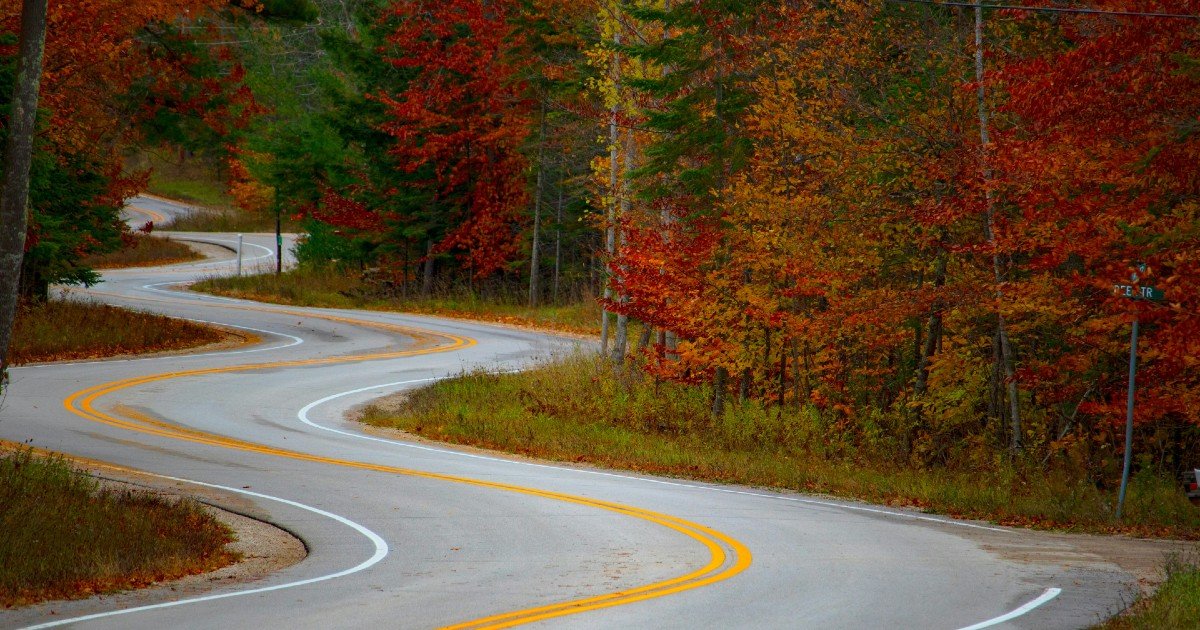
Because I’ve lived, loved, and lost chaturanga, the happiness I felt after my strong, powerful practice last week was freer. I did not feel an ounce of clinging to my ability to lower into those push-ups – even though I enjoyed the heck out of it. My understanding of the natural course of a yoga practice – which is a winding route filled with detours and surprising re-routings rather than a straight-forward shot – is now visceral. I know it’s all good – the gains and the losses. It all gets me where I’m going – onward through life with (hopefully) a little more grace and a lot more acceptance.
Because I’ve lived, loved, and lost chaturanga, I was unconcerned as I rolled up my mat after my exhausted practice. I know that I don’t need to make my practice into something it’s not. To force myself to do something I simply cannot do that day because I’m afraid that if it’s gone today, it will be gone tomorrow, is only an exercise in frustration, which, in itself, is exhausting. Like a flow without chaturanga, there is another way. Being exhausted can be received as an opportunity to slather on some self-love and -care and go forward by another way.
Freedom is something we give ourselves
To experience limitation and be able to shrug and think, “I’m tired, so what? Tomorrow is another day,” is incredibly freeing. It is also freeing to experience strength and capability with a similar open-mindedness. Feeling free like this allows us to gracefully plant and reap, laugh and weep, dance and mourn, and be built up and broken down with the easy (or at least easier) acceptance that the Byrds describe in their song.
As much as we’d like to, we do not have control over the direction that our lives – or our yoga practices – will take. We can only keep our eyes open to see what barriers we need to remove within ourselves that are keeping us from freely flowing where life is taking us. After all, even painful, circuitous detours get us where we’re going. (Turn, turn, turn) And, once we’ve accepted that this is the way we’re going, getting off the “main road” can offer some amazing views that we would not have seen otherwise. (Turn, turn, turn)
Going through the natural cycles of birth and death is the process by which an individual’s consciousness evolves. – Yoga Sutras of Patanjali, 4.2 (translated by Alan Finger)
Like the flow of water, the evolution of consciousness is effortless. All we need to do is to remove the barriers within us that block it from flowing, as a farmer removes rocks and trees that block the flow of water into the fields. – Yoga Sutras of Patanjali, 4.3 (translated by Alan Finger)