
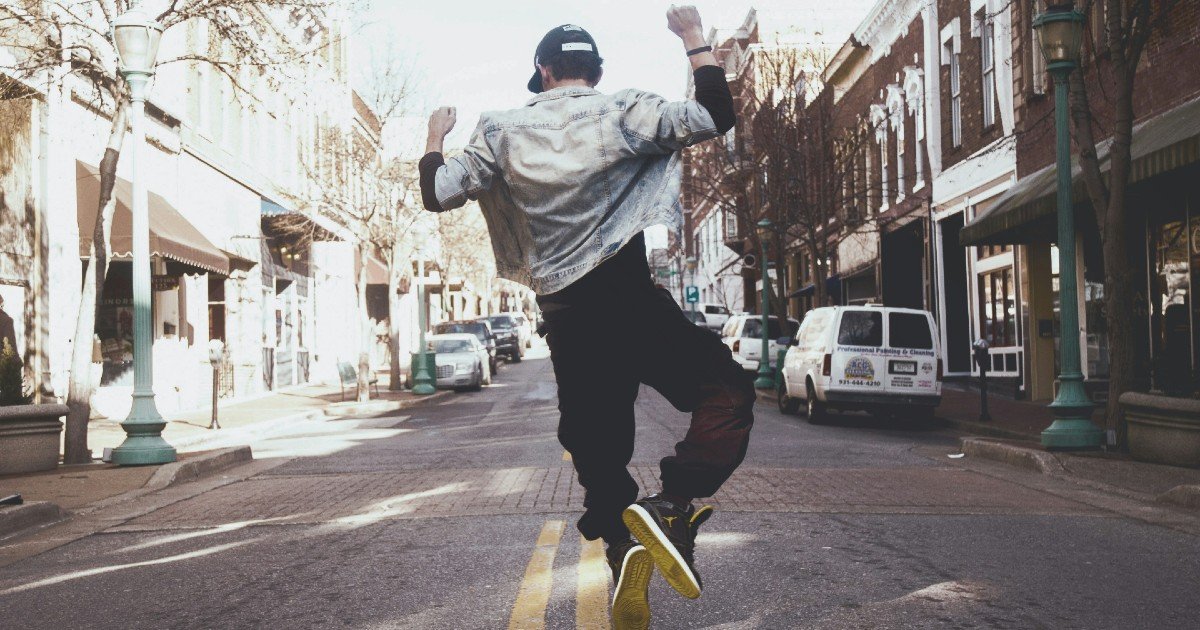
A wall flower no more
Two years ago, I found myself sitting at a table watching my dear friends cut a rug after our celebratory “graduation” dinner. All week, we’d been sarcastically calling this night our prom. All week, I had been quietly hoping that someone would opt out of the dancing with me. But as I sat there enjoying the music and watching them dance, I thought, “What am I doing? They are having so much fun!” and I surprised myself by joining them. And there has been no turning back! Ever since then, you couldn’t keep me in my seat if you tried.
Today, I’m hobbling around like an octogenarian after a wedding over the weekend. (I’ve got to remember to bring a pair of dancing shoes to events like this!) Every creak makes me smile as I remember how fun it was to dance the night away. Every groan makes me wonder where I got the idea that I didn’t dance and why I believed it for so long.
It probably didn’t help that my moves were decidedly lacking in the disco lessons that my mom signed me up for in fourth or fifth grade. It definitely didn’t help that I was placed in the far back corner, mostly behind the curtain, in The Walter Schalk School of Dance’s Broadway-esque year-end show when I was in eighth grade. (Though I give my younger self props for having the courage to sign up at all.)
Still, I scratch my head at how I let my lack of success in these highly choreographed situations influence my choices for decades. After all, the kind of dancing I’m talking about is not about success. It’s about moving with abandon. It’s about smiling goofily and singing at the top of your lungs with your friends. It’s about having a good time.
You’ve gotta dance like there’s nobody watching
I think the dancing I’m talking about is exactly the kind of dancing American author, professor and artist, William W. Purkey, was describing when he wrote,
“You’ve gotta dance like there’s nobody watching,
Love like you’ll never be hurt,
Sing like there’s nobody listening,
And live like it’s heaven on earth.”
Purkey’s last line grabs my attention. “Live like it’s heaven on earth.” Is that a bridge too far? Upon reflection, I don’t think so. Everything I have learned in my years studying yoga philosophy and contemplative spirituality has convinced me that what God wants for us, and what yoga is designed to help us find, is freedom and fulfillment. The freedom to be exactly who we are and the fulfillment that comes when we embrace ourselves, goofy dance moves and all.
Thinking about my disco- and Broadway-ineptness confirms another truth I’ve picked up along the way – the person who has the most power to limit us is us. I don’t remember any hecklers under the disco ball when I was a girl. And while my stage position was the furthest from center stage as you could get, I was also a full foot taller than every other girl on the stage, so in back would have been a good place for me even if I’d had better moves.
I’m the one who kept me in my chair for decades. I’m the one who was so worried about making a fool of myself that I chose to miss out on the fun. Similarly, I am the one who (rather suddenly) chose to break free from these self-imposed limitations. No one else could have convinced me to take such a “risk.” I credit both my yoga practice and my spiritual life for slowly but surely melting the icy cage of self-consciousness that imprisoned me.
Learning to love yourself leads to true freedom
Spirituality has taught me that love is the answer – love is the only thing that matters. Yoga has taught me that the only way to “love one another” is to start with yourself. Most of us, including me, will spend our lives learning how to love ourselves well. But, as it always does, slow and steady wins the race. Which is how I believe, after decades of practice, I suddenly realized that no one who loves me would want me to miss out on the pure joyful freedom of dancing at a party – and that includes me.
I hope you know the same is true for you – and I hope you dance.
The principle of asteya or non-stealing (Yoga Sutra 2.37) is one of the ten moral tenets of yoga philosophy. While it’s easy to see the ways we steal from others (copying someone’s work or chipping away at their self-esteem), it takes a willingness to look deep within to see the many ways we steal from ourselves – one of which is allowing self-consciousness to keep us at the table instead bouncing happily and freely around the dance floor with our friends.